

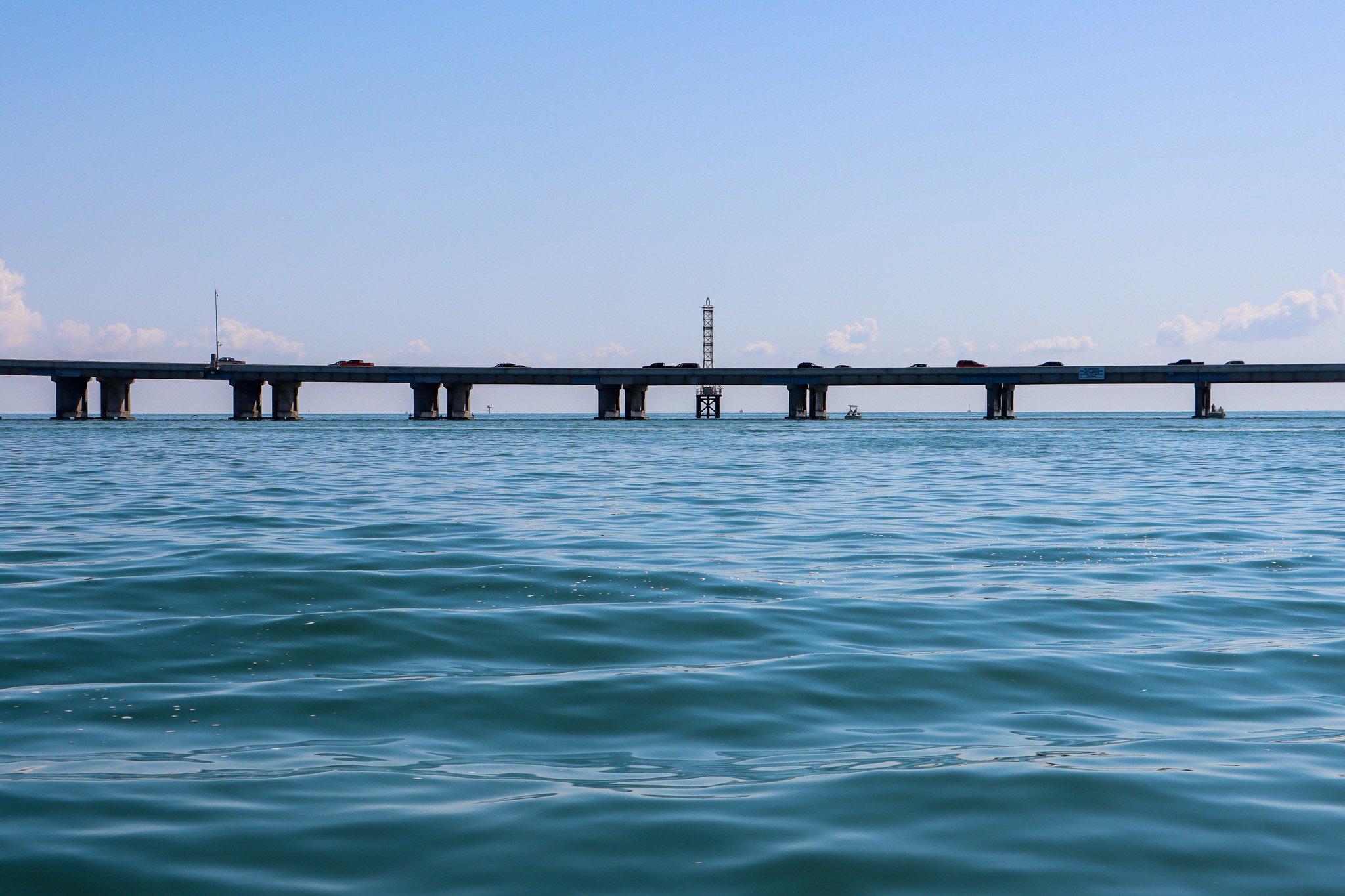

Thank you to our volunteers for an amazing 31st Annual Great Bay Scallop Search!
SCALLOPS FOUND
38
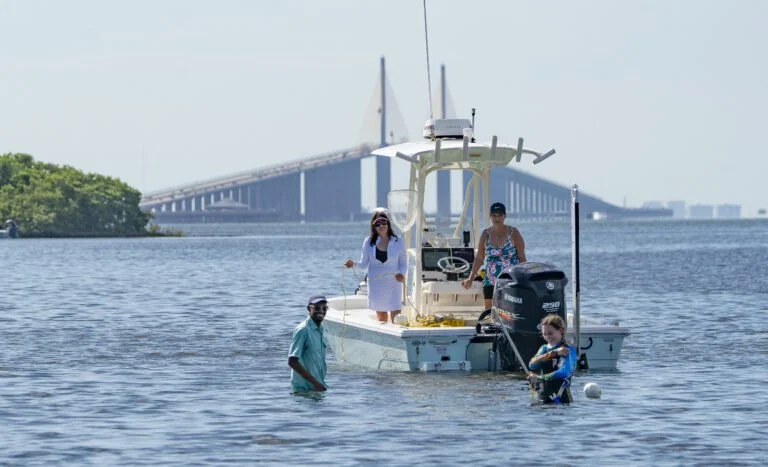
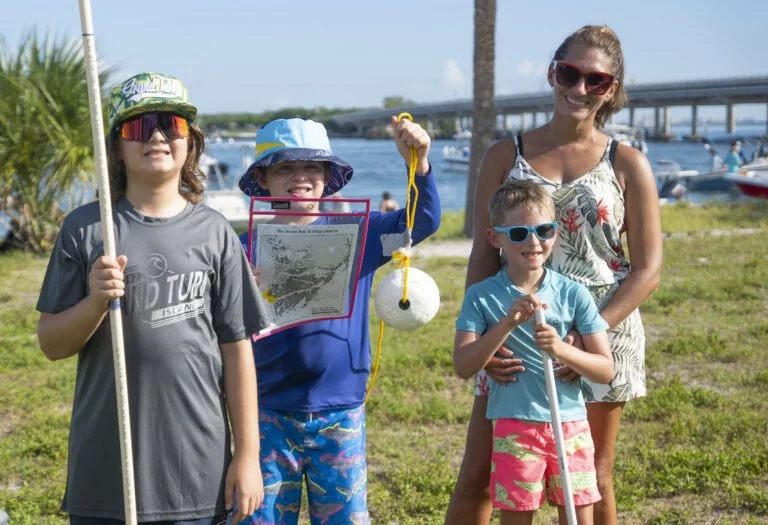
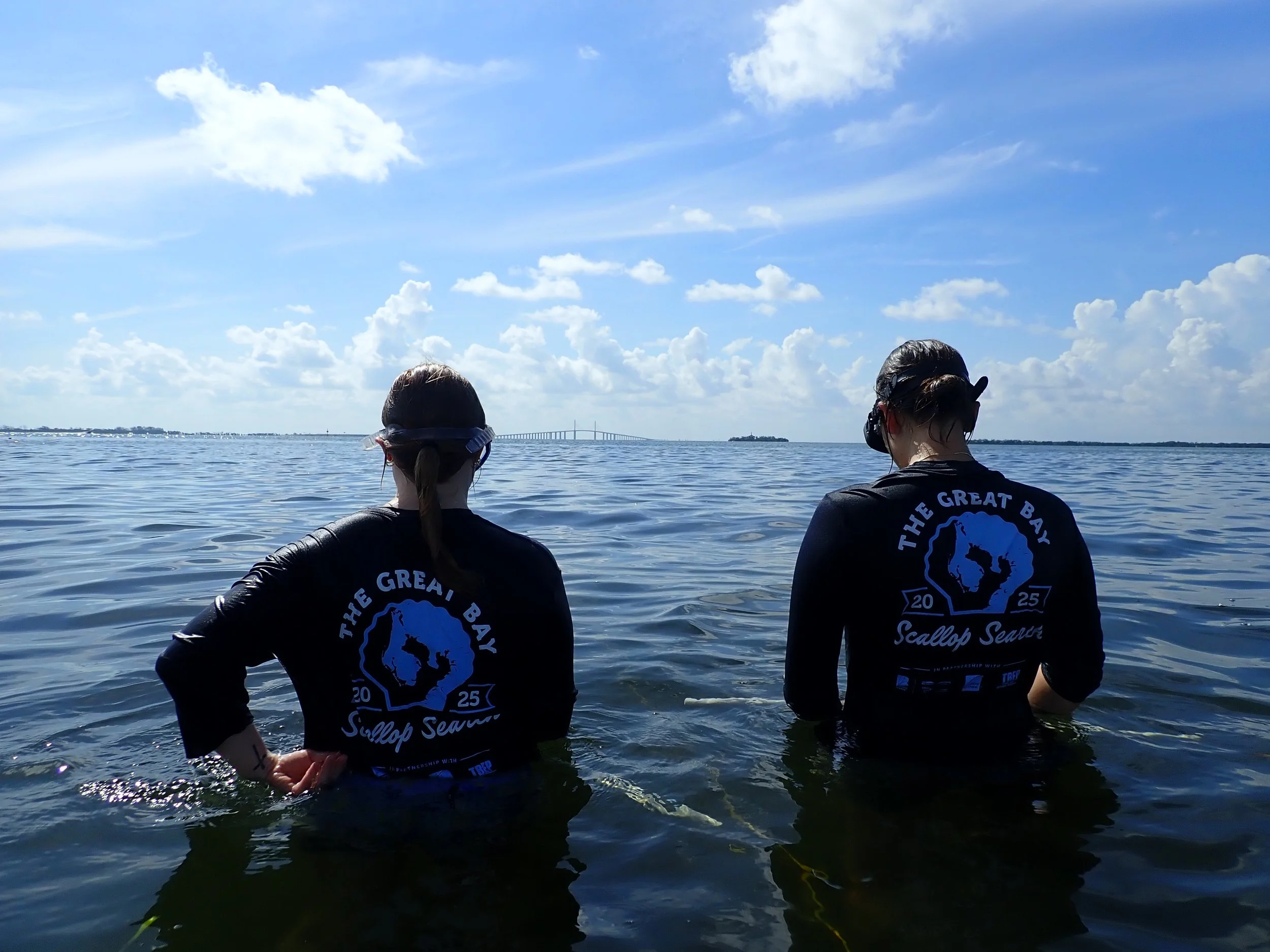
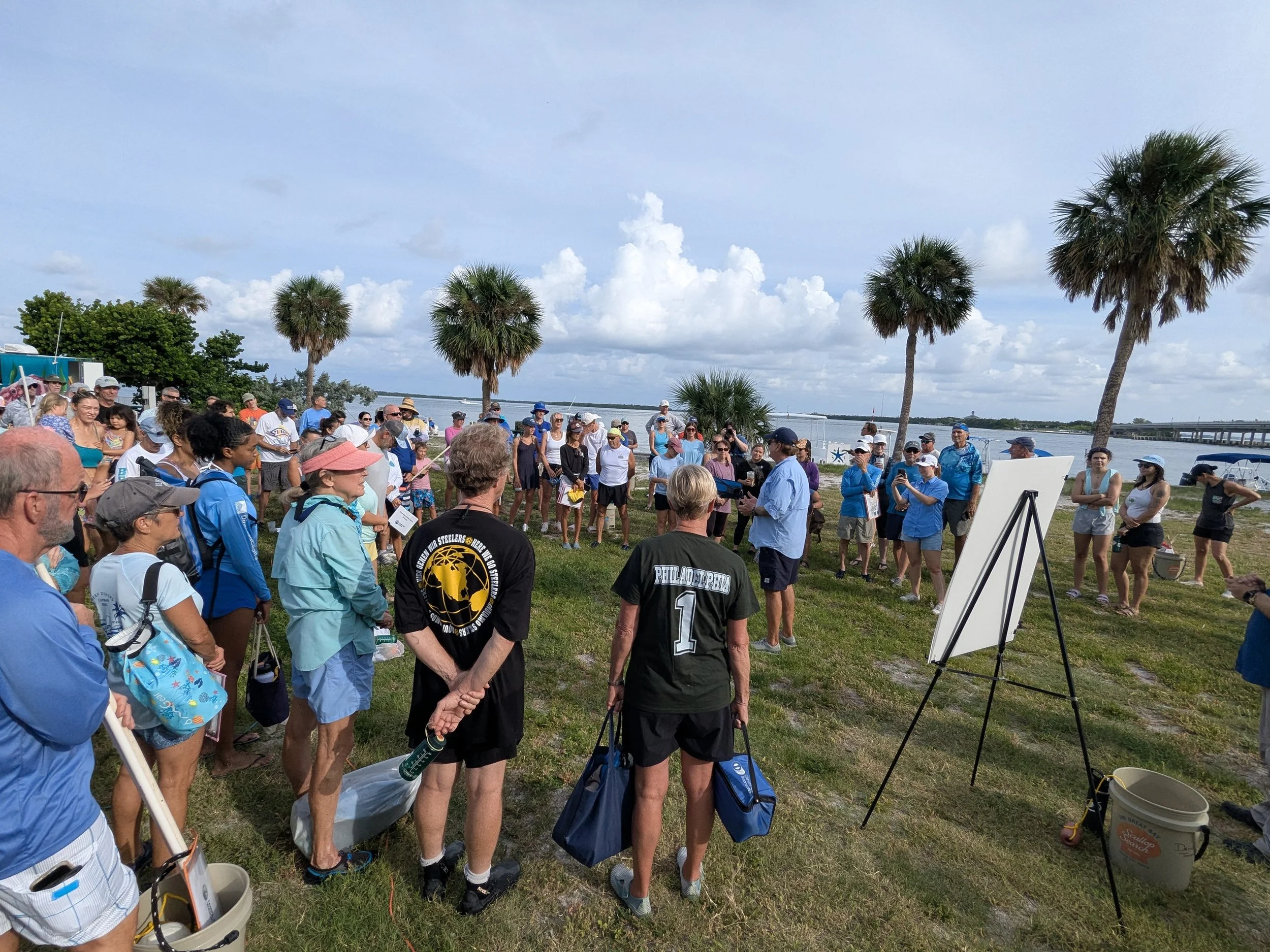
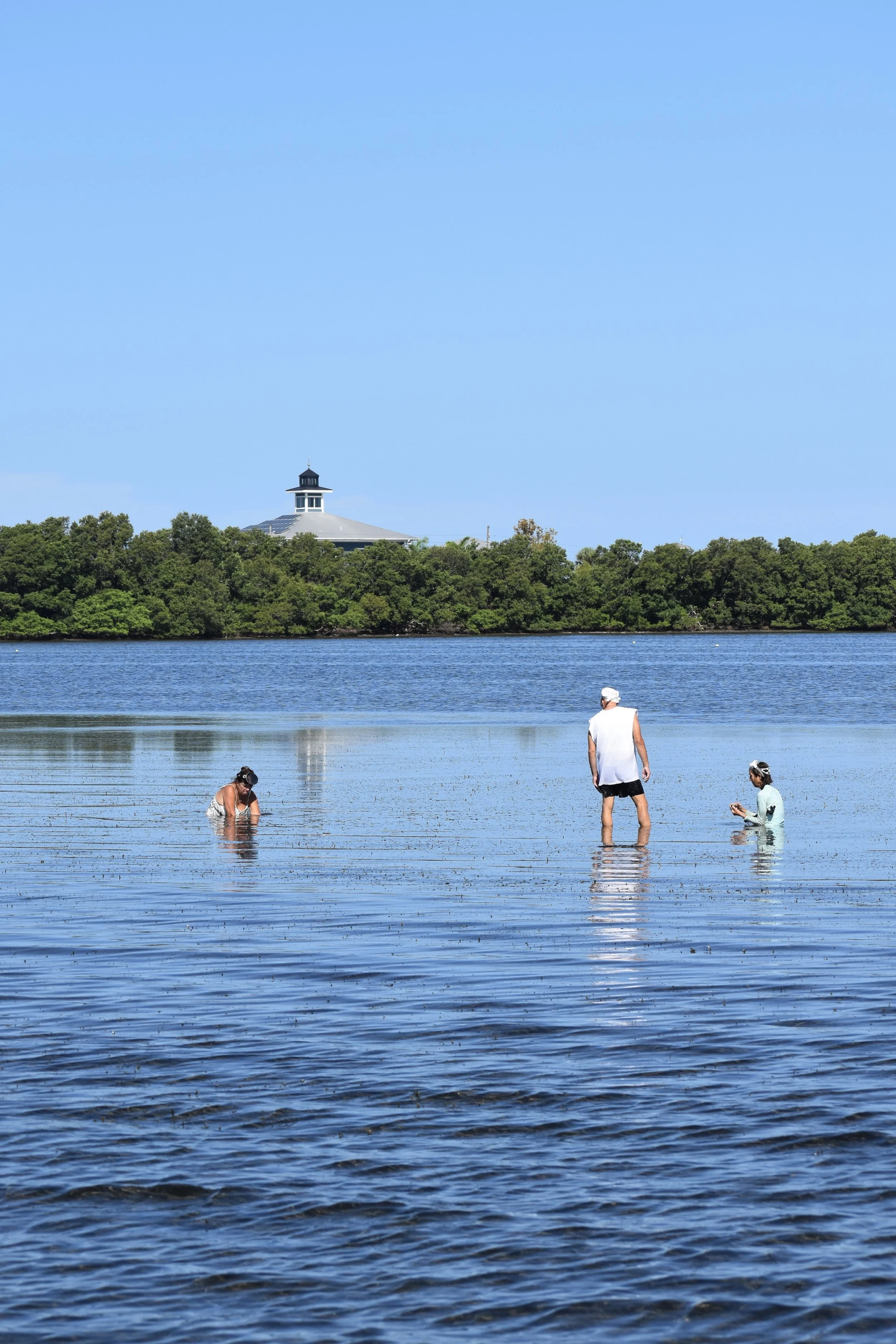
Tampa Bay Watch, in partnership with the Tampa Bay Estuary Program and Pinellas County Environmental Management, invited snorkelers, boaters, and kayakers to participate in the 31st Annual Great Bay Scallop Search on Aug. 1, 2026. Volunteers helped monitor the health of the bay scallop population, at three major locations. Their involvement was crucial in supporting Tampa Bay’s ongoing marine conservation efforts.
What is the Great Bay Scallop Search?
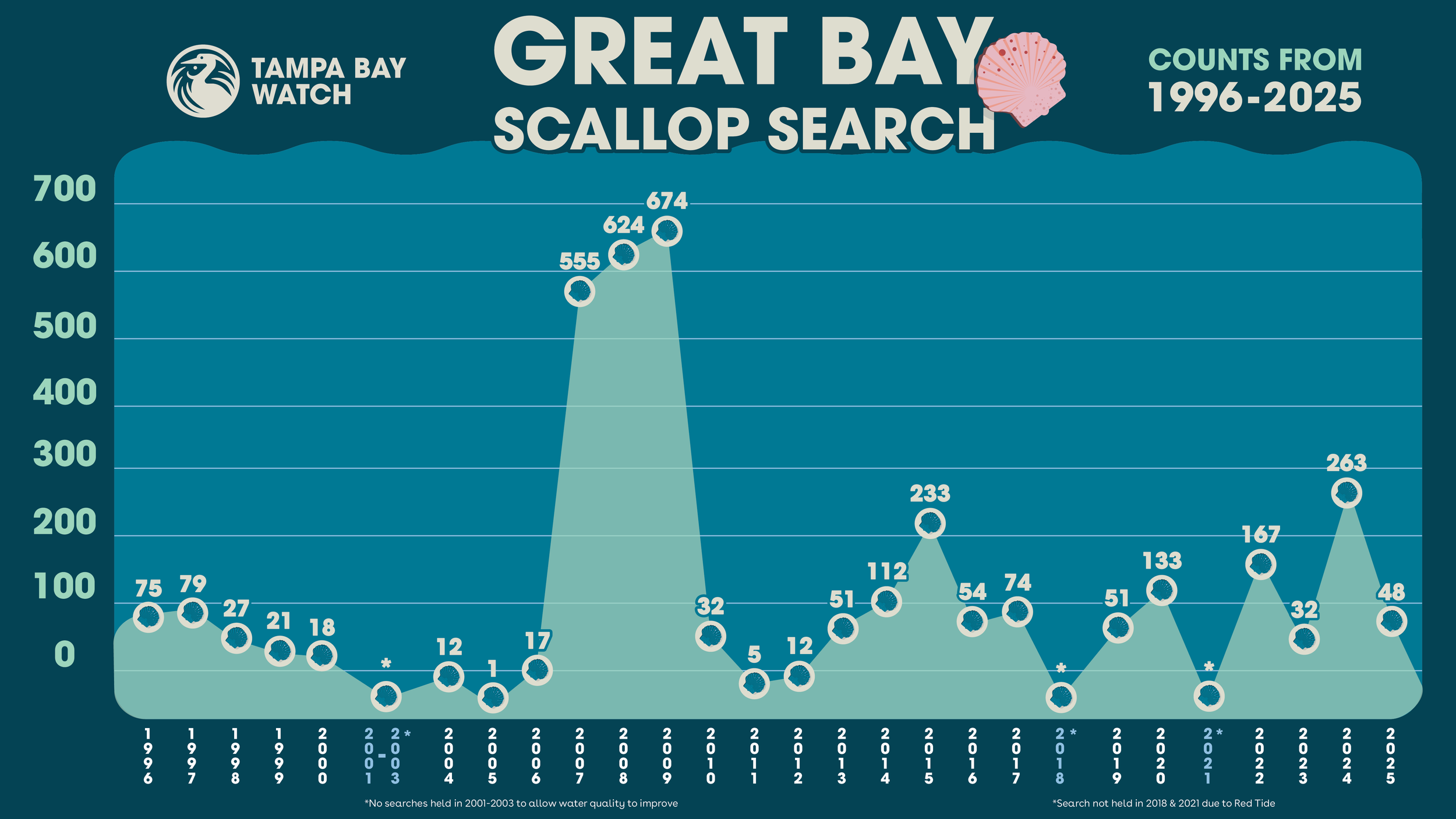
Since 1993, this event has been a cornerstone of our efforts to monitor and document the health and status of the local bay scallop population. Volunteer snorkelers and boaters will meticulously search designated sites within Middle and Lower Tampa Bay, Boca Ciega Bay, Emerson Point Preserve, and the Dunedin Causeway. The search outcomes vary annually, influenced by factors such as water quality, red tide, rainfall, and storms. The record high was set in 2009 with an impressive 674 scallops found.

WHEN
Saturday, August 1st,
9 AM - 1 PM
A captain’s meeting at 9 AM will provide essential instructions to all participants before they embark. Then, let the search begin!
WHERE
Volunteer boaters, kayakers, and snorkelers will assemble at the following locations:
• Fort De Soto Park boat ramp,
3500 Pinellas Bayway South, Tierra Verde, FL 33715
• Grandview Park boat ramp,
3734-3814 6th St S, St. Petersburg, FL 33705
• Emerson Point Preserve,
5801 17th St. W, Palmetto, FL 34221
• Dunedin Causeway,
Register as a Boater
SPOTS ARE FULL
SPOTS ARE FULL!
Register as a Kayaker
SPOTS ARE FULL!
SPOTS ARE FULL!
SPOTS ARE FULL!
SPOTS ARE FULL!
Thank you to the City of St. Petersburg, Pinellas County, and Manatee County for providing the space for these events.
Scallop Counts
•
Scallop Counts •
Why Bay Scallops?
Why Bay Scallops?
-
![Volunteer with bay scallops at Tampa Bay Watch]()
About the Bay Scallop
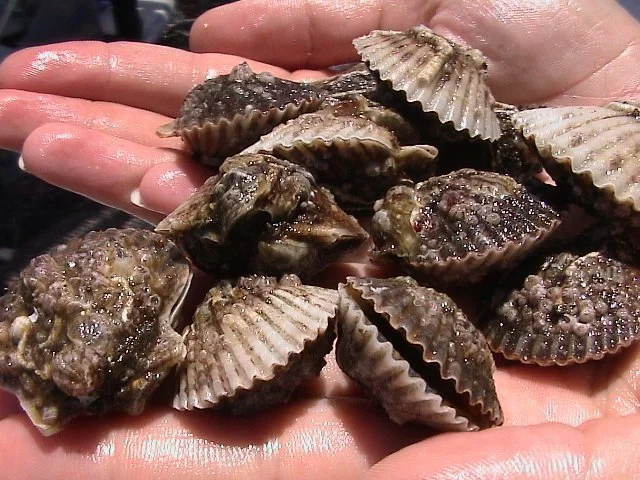
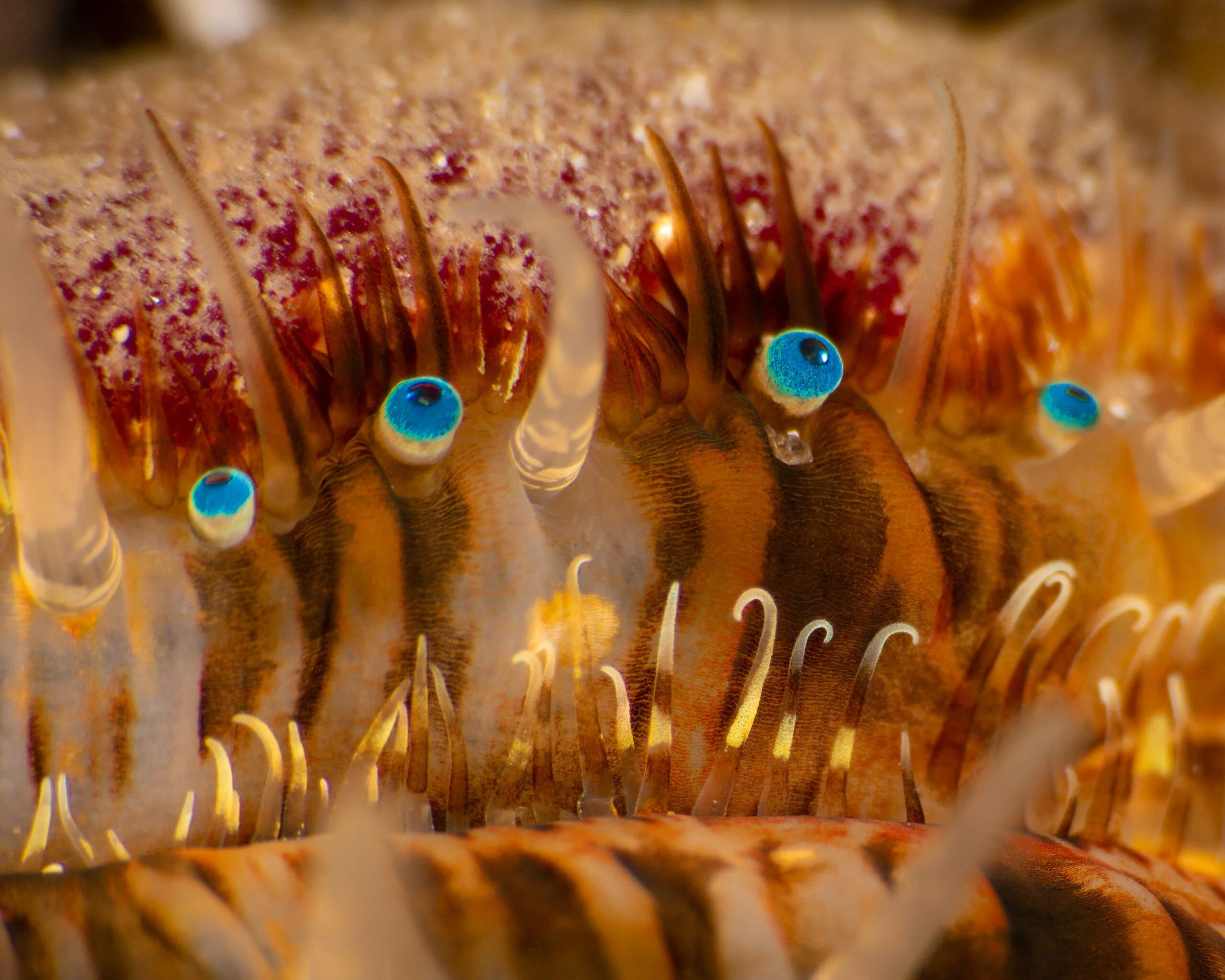
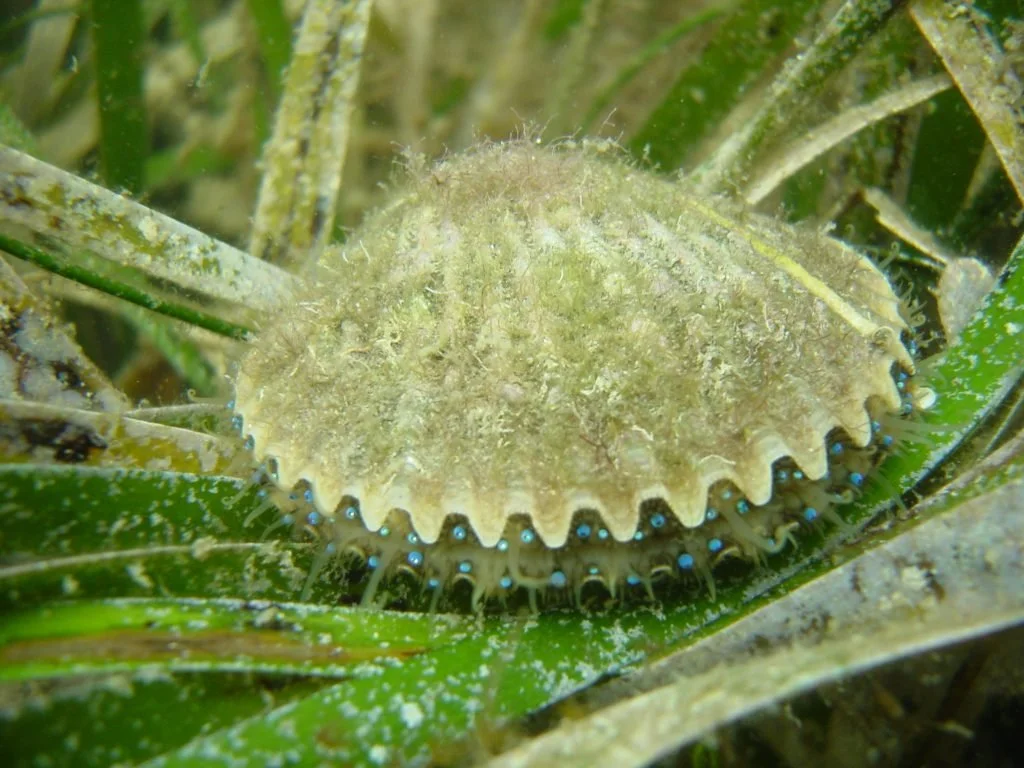
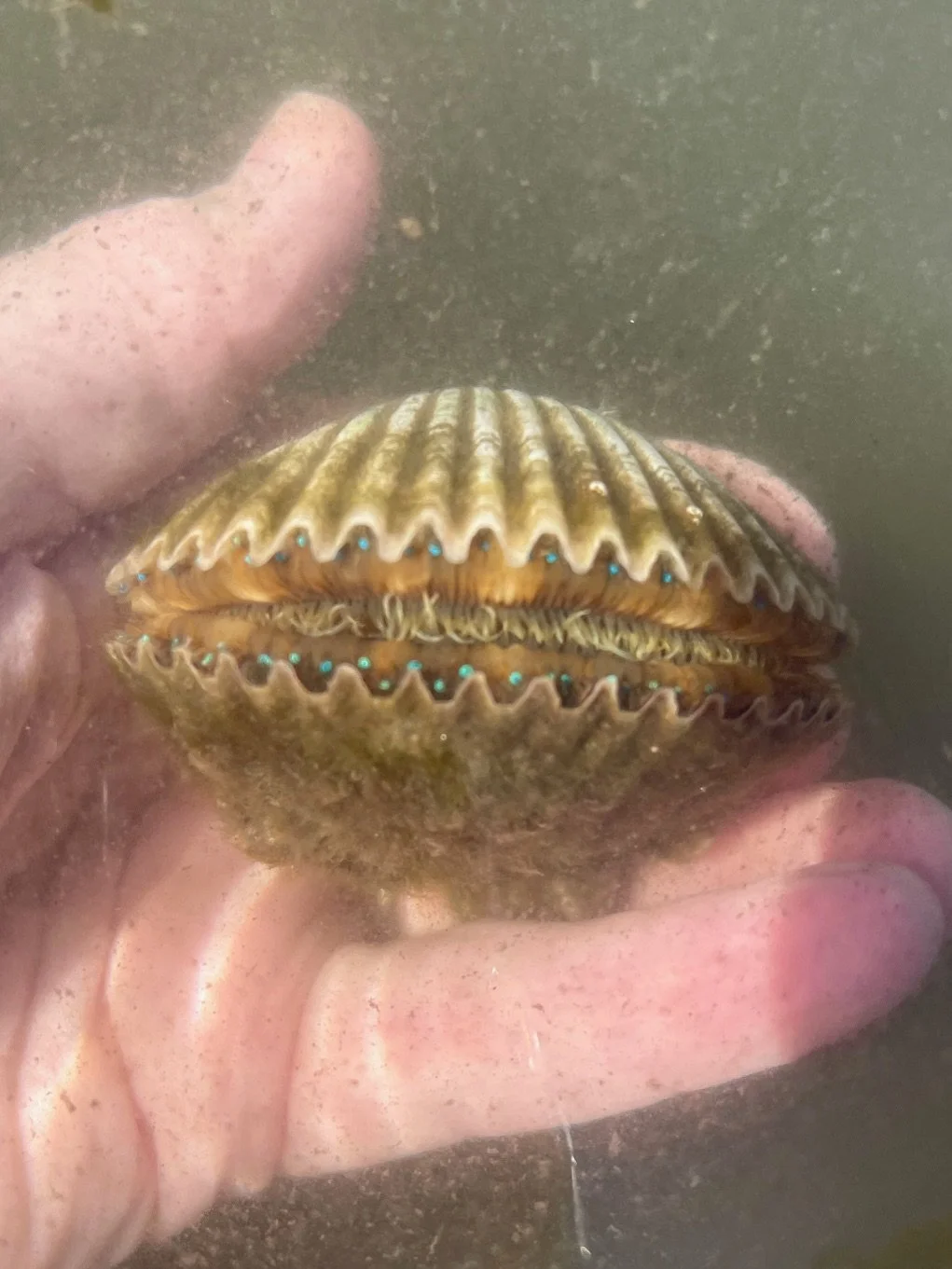
The bay scallop (Argopecten irradians) is a fascinating member of the bivalve family, known for its two-part shell. These small but mighty creatures grow to about two inches and boast an array of tiny blue eyes along the edge of their shell that detect movement and warn of approaching predators. When the water becomes too silty, or predators are near, they close their shells to protect their delicate gills.
-
![Bay scalloop up close showcasing bright blue eyes in the tampa bay waters]()
Nature's Cleaners
Bay scallops are more than just a pretty shell. As filter feeders, they continuously clean the bay's water by filtering out small particles of algae and organic matter. This not only benefits the water quality but also provides a crucial food source for bay crabs and other species. Bay scallops are incredibly sensitive to pollution, earning them the nickname “underwater canaries.” Their presence and health can signal changes in water quality, making them essential for monitoring the bay’s ecosystem.
-
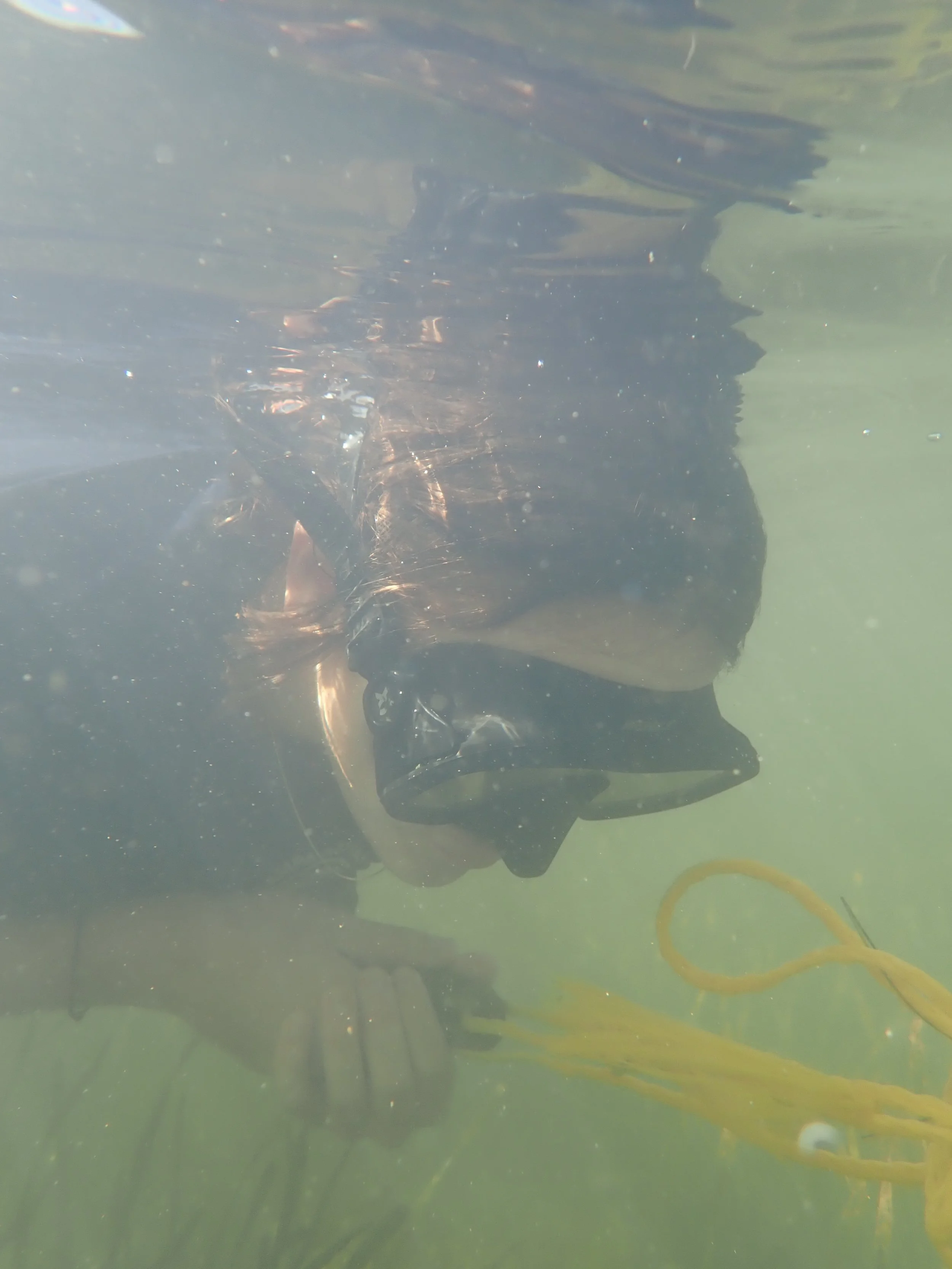
![Volunteer snorkleing to find scallops for the Tampa Bay Watch Great By Scallop Search]()
Population Influencers
Red tides, heavy rainfall, and storms can significantly impact scallop populations. In the early 1960s, bay scallops vanished from Tampa Bay due to severe pollution from dredging and industrial waste. However, improved water quality and healthier seagrass beds have helped the scallop population make a comeback.
-
![Bay Scallop sitting in seagrass during Great Bay Scallop Search]()
Water Quality
An adult bay scallop can filter as much as 14.7 liters of water per hour—that’s over 90 gallons of water a day! This is what makes them great indicators of the health of our bay, they require clear, salty water and seagrass habitats to fluoirsh. More scallops, better bay health!
-
![Skyway Bridge during scallop search]()
Locations
Bay Scallops are found along Florida’s west coast and up to West Palm Beach on the east coast.
-
![]()
Lifespan & Reproduction
Unlike clams, which can live up to 40 years, bay scallops have a short lifespan of just 12-18 months! Bay scallops develop both male and female sex organs, producing both sperm and eggs. Despite releasing around 12 million eggs, only one may survive to adulthood.
Thank You to Our Sponsors


Email Richard Radigan with questions about this event: rradigan@tampabaywatch.org
Media inquiries please contact sarcella@tampabaywatch.org